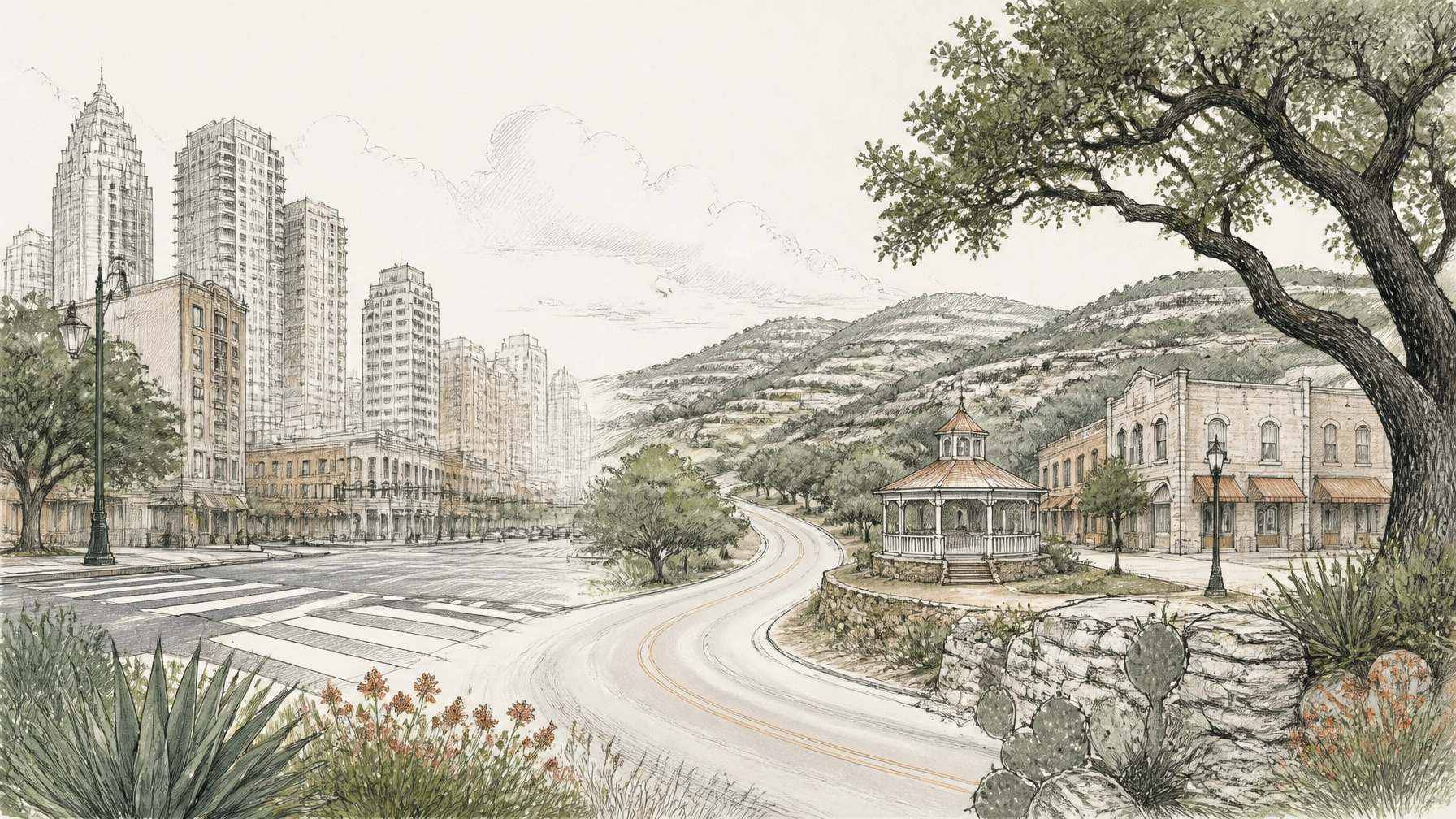
Moving from a major city to a place like Boerne, Texas, is more than changing your address. It is a shift in rhythm, scenery, and the way you connect with everyday life.
For urbanites, the adjustment can feel both refreshing and unfamiliar. You may trade high-rise views for limestone hills, subway rides for scenic drives, and packed cultural calendars for community events that bring many of the same people together throughout the year.
The good news is that Boerne does not ask you to give up an active, interesting lifestyle. It simply invites you to experience it differently.
1. Replace the city center with a walkable main street
In a large city, you may be accustomed to choosing from several neighborhoods, entertainment districts, museums, restaurants, and coffee shops at any given moment. Boerne’s historic downtown is more compact, but that is part of its appeal.
The Hill Country Mile and surrounding downtown area offer a welcoming mix of independent shops, cafés, galleries, restaurants, and local gathering places. Main Plaza serves as a natural point of orientation, giving the area a sense of place that can be harder to find in a large metropolitan center.
Instead of asking, “What can I do tonight?” you may begin asking, “What is happening downtown this weekend?”
That change in perspective is important. Boerne’s activity is often concentrated around seasonal celebrations, outdoor markets, local performances, art events, and community gatherings. The calendar may not be as crowded as it was in the city, but the experiences can feel more personal.

How to make the transition easier
- Choose one or two favorite downtown cafés and become a regular.
- Explore independent businesses before defaulting to familiar chains.
- Look for recurring events instead of expecting constant activity every night.
- Walk downtown at different times of day to understand its changing character.
- Give yourself time to recognize familiar faces.
In a city, anonymity can be comforting. In Boerne, being recognized can become one of the most enjoyable parts of daily life.
2. Let the outdoors become part of your routine
Urban living often requires intentional effort to reach nature. You may need to drive to a regional park, reserve time for a long walk, or plan an entire weekend around being outdoors.
In Boerne, nature is much closer to everyday life.
The Cibolo Trail, local parks, creekside paths, and surrounding Hill Country landscapes create opportunities for walking, birdwatching, photography, casual cycling, and quiet reflection. You do not necessarily need to plan an ambitious hiking trip. A short morning walk can become a regular part of your day.
This is one of the biggest lifestyle adjustments for people moving from cities: outdoor recreation is not always an occasional escape. It can become part of the ordinary structure of the week.
Start slowly. Choose a shaded trail, visit early in the day during warmer months, and keep water and comfortable walking shoes available. As you become familiar with the area, you can explore more challenging routes and nearby natural spaces.
The Cibolo Center for Conservation and the trails featured in Boerne’s Best Kept Secrets: The Hiking Trails Only Locals Know About offer useful inspiration for building an outdoor routine.
“Nature is not a place to visit. It is home.” : Gary Snyder
For many new residents, that idea captures the heart of Hill Country living. The landscape is not merely scenery outside your window; it becomes part of how you spend your time.
3. Expect a different kind of cultural life
A move to Boerne does not mean giving up art, music, food, or wine. It means experiencing culture through a smaller-town lens.
Rather than large museums and nationally touring productions, you may find more local galleries, artisan events, live music, seasonal festivals, historic buildings, and creative gatherings. The experience is often less formal and more connected to the community around it.
The broader Hill Country also offers wineries, tasting rooms, breweries, farm-to-table restaurants, and patios designed for lingering conversations. A meal may take longer than it would in the city: not because service is inefficient, but because the social experience is part of the occasion.
If you are accustomed to selecting from a large number of restaurants, focus on discovering personal favorites. Find the place where you enjoy the patio, the restaurant that remembers your preferences, or the tasting room that makes an afternoon feel unhurried.
You may also find that weekday events become more appealing. A midweek gallery visit, coffee with friends, or early dinner can replace the city habit of waiting for Friday night.
4. Build community through repetition
One of the most important differences between city and small-town living is how relationships develop.
In an urban environment, you can meet people through professional networks, neighborhood groups, gyms, clubs, religious organizations, and cultural events. But the size of the city may allow you to remain relatively anonymous even while being socially active.
Boerne’s community connections often grow through repetition. You return to the same park, attend the same class, volunteer at the same organization, or see the same people at downtown events. Familiarity gradually turns into conversation, and conversation can turn into friendship.
This does not happen instantly. New residents sometimes expect a small town to provide immediate belonging, but connection still requires participation.
Consider choosing one structured activity and one informal activity during your first few months. For example:
- Join a walking, golf, pickleball, or fitness group.
- Attend a local art, music, or food event.
- Volunteer with a conservation, library, school, animal-care, or community organization.
- Visit the same coffee shop or farmers market regularly.
- Invite a new acquaintance to join you for a trail walk or lunch.
The goal is not to fill every hour. It is to create a few dependable points of connection.
For more ideas, More Than a Golf Cart: How Boerne Retirees Are Finding Purpose Through Volunteering explores how residents can become involved at a comfortable pace.
5. Adjust to a slower: but not necessarily quieter: pace
“Slower” does not mean inactive. It often means less hurried.
You may drive fewer miles for routine errands, spend more time outdoors, and plan your day around weather and daylight. You may also notice that businesses have different hours, appointments require more advance planning, and some services are spread across the wider area.
Instead of resisting these differences, treat them as part of learning the geography and rhythm of your new home.
A few practical habits can help:
- Check business hours before making a special trip.
- Group errands when you are traveling outside downtown.
- Schedule outdoor activities for mornings or late afternoons during summer.
- Leave extra time when visiting unfamiliar neighborhoods or communities.
- Keep a list of favorite local services, restaurants, trails, and gathering places.
Urbanites are often skilled at navigating complexity. That skill remains useful in Boerne; it is simply applied to a different kind of environment.
6. Give yourself permission to miss the city
A successful transition does not require pretending that you no longer enjoy city life.
You may miss a favorite theater, a particular restaurant, public transportation, late-night convenience, or the energy of a crowded downtown. Those feelings are normal. They do not necessarily mean Boerne was the wrong choice.
The Hill Country is also close enough to larger metropolitan amenities for many residents to plan occasional trips when they want a broader selection of entertainment, shopping, medical services, or cultural experiences. The key is to think of those visits as intentional outings rather than necessities for everyday satisfaction.
You can also bring parts of your old lifestyle with you. Host a dinner club, organize a film night, continue a favorite hobby, or invite city friends to visit for a weekend in the Hill Country.
Relocation is not about erasing your former life. It is about deciding which parts to carry forward and which parts to leave behind.
7. Test-drive the lifestyle before fully committing
If you are still considering a move, spend time in Boerne during different seasons and under ordinary conditions: not only during a festival or beautiful weekend.
Visit on a weekday. Run errands. Walk a trail in the morning. Drive through potential neighborhoods. Have dinner downtown. Notice how long it takes to reach the places you expect to visit regularly.
You can also use the questions in Is Boerne Right for You? A 10-Question Quiz for Pre-Retirees to think through your preferences around community, outdoor activity, housing, healthcare access, and pace of life.
The more realistically you experience the town, the easier it becomes to distinguish a genuine lifestyle fit from the temporary excitement of a vacation.
A thoughtful next step
Moving from the city to the country is not a retreat from an interesting life. For many people, it is a way to make daily life more intentional: more walks, more familiar faces, more time outdoors, and more connection to place.
Boerne offers a rare balance for urbanites who want Hill Country beauty without complete isolation. The transition may take patience, but the reward can be a retirement lifestyle that feels active, welcoming, and genuinely your own.
When you are ready to discuss how a move may fit into your broader retirement goals, schedule a private meeting with a fiduciary financial advisor today by calling (512) 593-8380 or by visiting: https://calendly.com/portafoliocapital/15min
To learn more about Portafolio Capital Management dba Mau Sanchez Capital, visit https://portafoliocapital.com/ or call (512) 593-8380.
Portafolio Capital Management dba Mau Sanchez Capital is a Registered Investment Adviser. This content is for informational purposes only and does not constitute investment advice or a solicitation to buy or sell any security. Advisory services are provided only pursuant to a written advisory agreement.
This article may include stories, scenarios, and perspectives created or assisted by artificial intelligence. Although the individuals and circumstances described may be fictional, the topics are intended to reflect real financial, personal, and lifestyle issues that retirees and individuals commonly face.
The content is provided to encourage readers to consider different perspectives that may affect their retirement, regardless of whether they are currently planning, approaching retirement, or already retired. It is intended for general educational and informational purposes only and should not be interpreted as personalized investment, financial, tax, legal, medical, or retirement-planning advice.
Individual circumstances vary. Readers should independently verify any information presented and consult appropriately qualified professionals before making financial or personal decisions. No advisory, professional, or client relationship is created through the use of this website.
Leave a Reply