
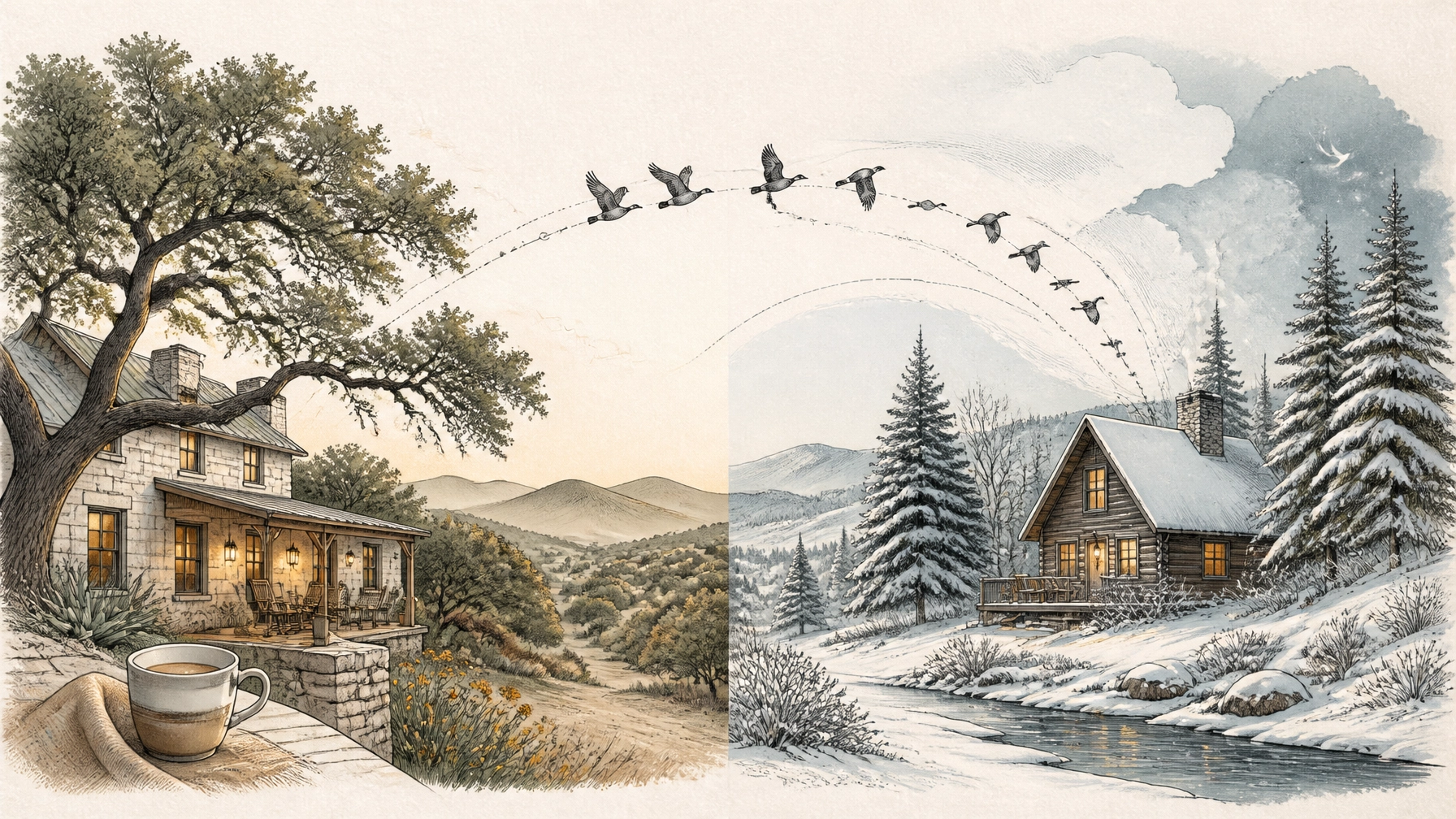
For many retirees, the ideal lifestyle is not tied to one address. It may mean spending winter mornings walking beneath live oaks in Boerne, then returning north when the days grow long and gardens begin to bloom.
This kind of seasonal living can offer the best of both worlds: familiar connections in one place and a fresh rhythm in another. But enjoying two homes requires more than choosing two appealing destinations. The arrangement works best when the logistics are simple, the routines are realistic, and each home is prepared for the months you are away.
Boerne can be an inviting seasonal base for people drawn to the Texas Hill Country’s outdoor activities, historic downtown, restaurants, wineries, and slower pace. Before making a commitment, consider how a dual-home lifestyle would fit your time, energy, household needs, and overall retirement priorities.
“Home is the nicest word there is.” : Robert Frost
Start With the Lifestyle, Not the Real Estate
The first question is not whether you should rent or buy. It is what you want your year to feel like.
Some snowbirds prefer a predictable pattern: Boerne from late fall through early spring, followed by several months at a northern home. Others want more flexibility, moving according to family events, weather, travel plans, or personal preference.
Consider:
- How many months do you genuinely want to spend in each location?
- Do you want to travel by car, fly, or use a combination of both?
- Will family members visit one home more often than the other?
- Are you comfortable maintaining two residences?
- Would you rather have a turnkey lock-and-leave property or a larger home with more upkeep?
- Do you want a socially active neighborhood or a quieter Hill Country setting?
A seasonal home should support your lifestyle rather than create another full-time responsibility. If your goal is a peaceful retirement in Boerne, the right home may be the one that is easiest to secure, maintain, and enjoy: not necessarily the largest or most elaborate property.
For a broader look at how Boerne may fit your priorities, read the Retirement Relocation Scorecard.
Rent First, or Buy for the Long Term?
There is no universal answer to whether seasonal residents should rent or buy in Boerne. The right choice depends on how certain you are about your routine and how much responsibility you want to carry.
Renting provides flexibility
A seasonal rental can be a practical way to experience Boerne before purchasing. You can test different areas, learn how far you want to be from the Hill Country Mile, and see how the community feels during both busy and quiet periods.
Renting may be especially appealing if you:
- Are new to the Texas Hill Country
- Want to compare neighborhoods
- Are still deciding how long you will stay each year
- Prefer not to manage repairs and landscaping
- Want to travel elsewhere during part of the winter
A trial season can reveal details that are difficult to learn during a short vacation. You may discover that you prefer a walkable setting, need more storage, want a garage, or would rather be closer to medical services and everyday shopping.
Buying offers continuity
Owning a Boerne home may make sense when you expect to return year after year and want a consistent place for your belongings, visitors, and routines. A permanent home can also make it easier to personalize your space and become part of the local community.
Before buying, think beyond the purchase itself. Include the ongoing responsibilities of insurance, utilities, maintenance, landscaping, property management, and securing the home while you are away. A beautiful property can become burdensome if it requires constant attention from another state.
For many seasonal homeowners, a manageable house, villa, or lock-and-leave residence may be more suitable than a large property with extensive grounds.

Create a Two-Home Operating System
The secret to successful seasonal living is reducing the number of decisions you must make during every transition.
Think of each home as having its own operating system. Keep duplicate essentials in both locations whenever possible:
- Everyday clothing
- Toiletries
- Chargers and basic electronics
- Kitchen supplies
- Outdoor walking or golf gear
- Pet supplies
- Important household tools
A duplicate setup allows you to travel lighter and prevents the familiar frustration of discovering that something essential is sitting in the other house.
Create a shared calendar for both residences. Include:
- Departure and arrival dates
- Utility and service appointments
- Vehicle maintenance
- Prescription refills
- Home inspections
- Family visits
- Travel reservations
- Seasonal yard or landscaping work
A simple transition checklist can be kept in a phone, tablet, or printed folder. The goal is not to create paperwork for its own sake. It is to make leaving and returning feel routine.
Prepare the Home You Leave Behind
The northern home often requires the most preparation, especially during the coldest months. Before departing, arrange for the services that keep the property looking occupied and functioning properly.
Depending on the home and climate, this may include:
- Heating and plumbing checks
- Snow removal
- Lawn or garden care
- Mail handling
- Periodic visits from a trusted neighbor or property manager
- Leak detection and security monitoring
- Safe storage for valuables
- Automatic payment for recurring household bills
Contact your insurance company before an extended absence. Policies can treat vacant or unoccupied homes differently, and coverage requirements vary. Ask what your policy requires when no one will be living in the residence for several weeks or months.
The same principle applies to your Boerne home if you spend summers elsewhere. Texas heat can place different demands on a home, including air-conditioning, landscaping, irrigation, and utility systems. Ask local service providers what should be checked before you leave for the season.

Make Health and Travel Part of the Plan
Seasonal living is more enjoyable when healthcare and transportation are considered before they become urgent.
Keep an up-to-date list of medications, providers, allergies, insurance information, and emergency contacts in both homes. Before each season begins, confirm how your health coverage works in the state where you will be staying. If you use a Medicare Advantage or prescription drug plan, check its provider and pharmacy rules before traveling.
It can also help to identify:
- A nearby primary care provider
- An urgent care location
- A preferred pharmacy
- The closest hospital
- A reliable transportation option if you cannot drive
If you split your time between states, ask your providers how medical records and prescriptions can be coordinated. These are practical conversations to have before you need care.
Travel itself deserves attention. Some seasonal residents drive because they want a vehicle, pets, and personal items with them. Others fly and keep a car at each home. There is no single best method. Choose the approach that minimizes fatigue, complexity, and last-minute pressure.
Build a Real Life in Boerne
A seasonal home should not feel like a hotel room you visit for a few months. The more connected you become, the more meaningful each return can feel.
Boerne offers many ways to create familiar routines:
- Morning walks near parks and trails
- Coffee or lunch in the historic downtown area
- Golf and other outdoor activities
- Winery and restaurant visits
- Local arts and cultural events
- Classes, clubs, and volunteer opportunities
- Visits with nearby family and friends
Outdoor recreation can be an especially natural part of a Boerne winter. For ideas, explore Boerne’s hiking trails and quiet outdoor escapes.
Volunteering is another way to build relationships without overcommitting. A seasonal schedule may still allow you to participate in community programs, conservation activities, library events, or service organizations. Read how Boerne retirees are finding purpose through volunteering.
The best seasonal routines are sustainable. Leave room for unplanned afternoons, visiting relatives, rest, and the simple pleasure of having nowhere else to be.

Keep the Financial Conversation Practical
Two homes naturally create two sets of expenses. A realistic household budget should account for housing, insurance, utilities, maintenance, travel, vehicles, storage, activities, and unexpected repairs.
The purpose of this exercise is not to predict every cost perfectly. It is to understand whether the lifestyle feels comfortable and sustainable across the full year.
For households already working with a financial professional, seasonal living can be a useful topic to bring to the conversation. The discussion may include how your desired travel pattern, housing choices, cash-flow needs, and investment portfolio design fit together.
Mau Sanchez Capital focuses on client-specific retirement planning and wealth management using transparent, liquid, publicly traded markets, long-term equity ownership, appropriate asset allocation, and risk management through portfolio construction. The firm’s approach is designed around each client’s circumstances rather than a one-size-fits-all solution.
A Simple Seasonal Transition Checklist
Before leaving your northern home
- Confirm heating, plumbing, and security arrangements.
- Schedule snow removal or property checks.
- Review insurance requirements for an extended absence.
- Forward mail or arrange mail management.
- Set up automatic payments.
- Pack medications, identification, and essential documents.
- Confirm travel plans and vehicle readiness.
When arriving in Boerne
- Check utilities, HVAC, plumbing, and security systems.
- Restock household essentials.
- Update local emergency contacts.
- Confirm medical and pharmacy information.
- Reconnect with neighbors, friends, and community activities.
- Settle into a manageable weekly routine.
Before leaving Boerne
- Arrange home maintenance and landscaping.
- Secure outdoor furniture and equipment.
- Set thermostats appropriately for the season.
- Check for leaks, pests, and weather-related issues.
- Confirm mail and package handling.
- Activate remote monitoring.
- Leave an emergency contact with access to the home.
Seasonal living can be an elegant way to shape retirement around the places, people, and experiences you value most. Boerne may serve as a warm winter base, a long-term second home, or simply a place to test a different pace of life before making a larger move.
The most successful dual-home strategy is usually the one that feels calm, organized, and flexible. Start with the life you want, then choose the homes and systems that make that life easier to enjoy.
Schedule a private meeting with a fiduciary financial advisor today by calling (512) 593-8380 or by visiting: https://calendly.com/portafoliocapital/15min
Portafolio Capital Management dba Mau Sanchez Capital is a Registered Investment Adviser. This content is for informational purposes only and does not constitute investment advice or a solicitation to buy or sell any security. Advisory services are provided only pursuant to a written advisory agreement.
To learn more about Portafolio Capital Management dba Mau Sanchez Capital, visit https://portafoliocapital.com/ or call (512) 593-8380.
This article may include stories, scenarios, and perspectives created or assisted by artificial intelligence. Although the individuals and circumstances described may be fictional, the topics are intended to reflect real financial, personal, and lifestyle issues that retirees and individuals commonly face.
The content is provided to encourage readers to consider different perspectives that may affect their retirement, regardless of whether they are currently planning, approaching retirement, or already retired. It is intended for general educational and informational purposes only and should not be interpreted as personalized investment, financial, tax, legal, medical, or retirement-planning advice.
Individual circumstances vary. Readers should independently verify any information presented and consult appropriately qualified professionals before making financial or personal decisions. No advisory, professional, or client relationship is created through the use of this website.
Leave a Reply