
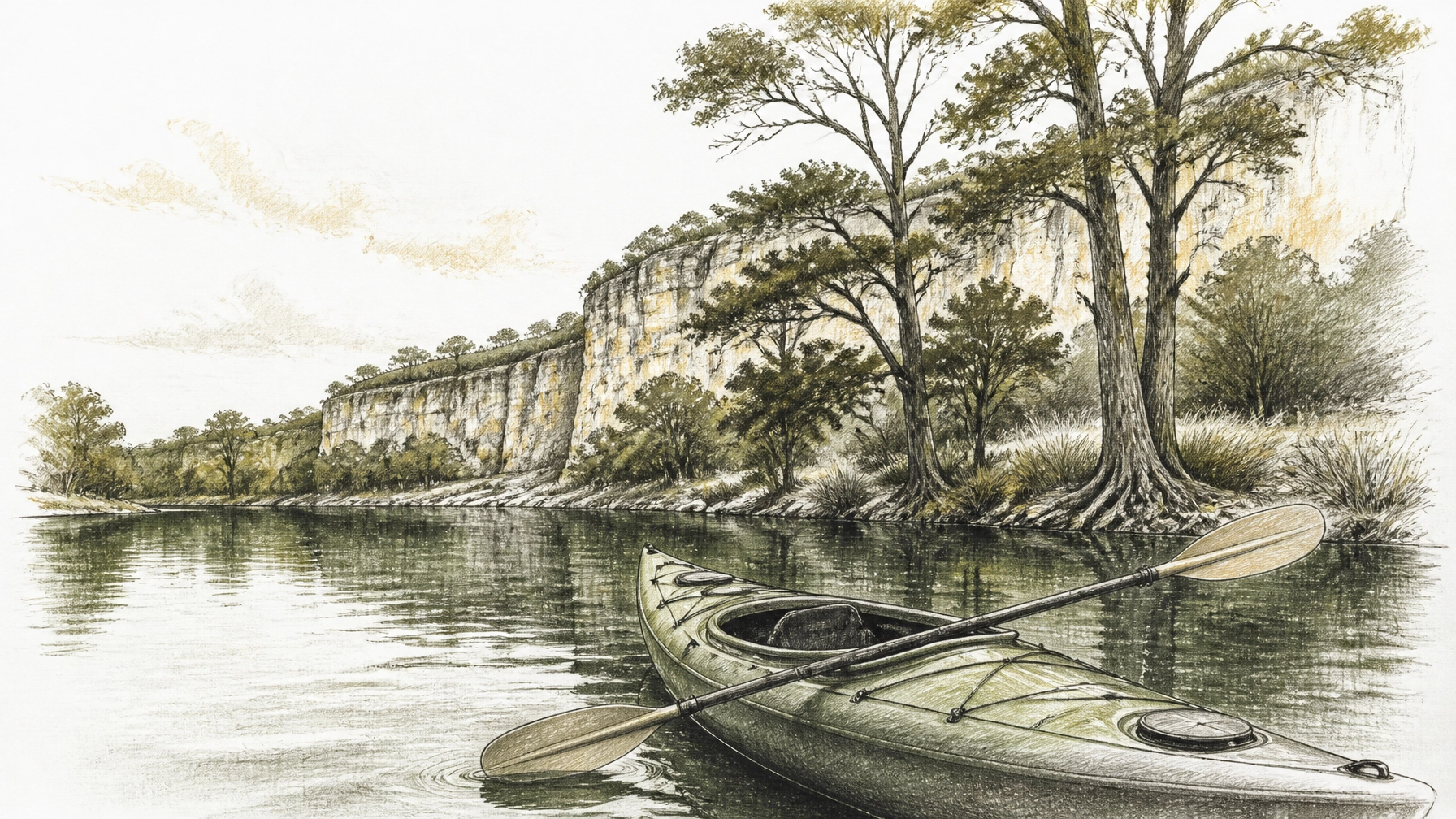
There is a particular kind of quiet that arrives when a kayak glides around a bend in the Guadalupe River. The paddle dips, the current carries you forward, and the limestone banks seem to hold the afternoon in place.
For retirees and pre-retirees considering the Boerne area, the Guadalupe offers more than a summertime float. It is a way to experience the Texas Hill Country at a slower pace: from the shade of bald cypress trees, beneath limestone bluffs, and close enough to the water to notice turtles, birds, and the occasional fish moving through the current.
Whether you prefer the gentle rhythm of tubing or the light exercise of kayaking, the river can become one of the region’s most enjoyable outdoor amenities. The key is choosing the right access point, checking conditions, and planning a trip that matches your comfort level.
A Guadalupe River outing close to Boerne
One of the most convenient public access points near Boerne is Guadalupe River State Park, located approximately 13 miles east of town along State Highway 46. The park includes four miles of river frontage and offers opportunities for swimming, fishing, tubing, canoeing, hiking, picnicking, and birdwatching.
The park is also the starting point for the Guadalupe River State Park Paddling Trail, a five-mile route that continues downstream to Nichol’s Landing County Park. Depending on water levels, current, and your pace, the trip can take roughly two to six hours.
That range is important. A river trip is not always a quick afternoon activity. A leisurely float with frequent stops may take much longer than a steady paddle, and low water can require occasional maneuvering around shallow areas. Build in extra time rather than trying to force the trip into a tight schedule.
“Once you leave the park, you won’t be able to walk or take the river back. The river does not run in a circle.” : Texas Parks and Wildlife Department
In other words, plan your take-out before you launch. The park does not function as a loop trail, and paddlers should arrange a shuttle, a pickup, or assistance from a local outfitter.

Tubing or kayaking: Which experience fits you?
Tubing is usually the simpler option. You let the current do most of the work, enjoy the shade, and focus on conversation and scenery. It can be a pleasant choice for a warm day when the goal is relaxation rather than distance.
Still, tubing requires more than simply sitting in an inflatable ring. You should be comfortable entering and exiting the water, managing the current, and responding if your tube approaches a fallen branch or shallow section. There are no lifeguards, and Texas Parks and Wildlife advises visitors to review its water safety guidance before getting in the river.
Kayaking offers more control and a little more activity. A sit-on-top kayak can be a practical choice for casual paddlers because it is relatively easy to enter and exit. Recreational kayaks with wider hulls are generally more stable than narrow touring boats, which may make them a better fit for beginners.
Kayaking also gives you more flexibility. You can angle across a current, pause in a quiet eddy, explore the shoreline from the river, or cover a longer section at your own pace. For many active retirees, it is an enjoyable way to combine outdoor recreation, balance, and upper-body movement without making the day feel like a workout.
The best option depends on the day you want:
- Choose tubing for a social, low-effort float when conditions are mild.
- Choose kayaking if you want more control, distance, and active participation.
- Consider a guided or outfitted trip if you are unfamiliar with the river or do not have a second vehicle for the shuttle.
- Stay on land if conditions are high, fast, stormy, or otherwise uncomfortable. The river will still be there another day.
What to know before launching
A successful river outing begins before you arrive at the water. Guadalupe River State Park often reaches capacity, especially during the warmer months, so reservations for day use are strongly recommended.
Before leaving home, confirm:
- Park access and reservations. Check for capacity limits, temporary closures, and current park alerts.
- River flow and weather. Texas Parks and Wildlife recommends contacting the park for current flow information. You can also review the NOAA Guadalupe River at Comfort gauge, along with current weather and flood warnings.
- Your launch and take-out points. The official paddling trail begins at the park and ends at Nichol’s Landing. The take-out is not a place to improvise after a long day on the water.
- Transportation. Arrange a two-vehicle shuttle or coordinate transportation with an outfitter. Do not assume you can paddle back upstream.
- Personal flotation devices. Wear a properly fitted, U.S. Coast Guard-approved personal flotation device, particularly if you are a weak swimmer or are boating with children.
- Sun and hydration protection. Bring drinking water, sun protection, a hat, sunglasses with a retainer, and clothing that can get wet.
- River-friendly supplies. Glass and Styrofoam are prohibited in the park’s day-use river area. On the paddling trail, Texas Parks and Wildlife also prohibits plastic containers under five ounces.
A dry bag can keep your phone, vehicle keys, medications, and other essentials secure. It is also wise to carry a small first-aid kit and let someone know your route and expected return time.

Respect the river: and the land beside it
The Guadalupe is beautiful because it remains a living Hill Country landscape, not simply a recreational channel. Bald cypress, pecan, cottonwood, oak, and elm trees line portions of the river, while limestone shelves and boulders shape the shoreline.
Paddlers may see deer, armadillos, raccoons, foxes, squirrels, beavers, and a wide range of birds. Slow down when you can. Wildlife viewing is one of the rewards of moving at river speed.
The same landscape also requires care. Much of the riverbank outside public parks and designated access points is privately owned. According to Texas Parks and Wildlife’s paddling-trail guidance, public use of the river corridor does not mean that every adjoining riverbank is open for recreation. Stay in the river or use only the bank necessary to portage a hazard, and do not cross fences, posted areas, or private property without permission.
There is also a low-water crossing approximately 2.5 miles below the paddling-trail put-in. Paddlers should follow the official instructions for exiting on river left, portaging the immediate area, and re-entering below the crossing.
Leave no trace, keep music and conversation at a considerate volume, and take every piece of trash with you. A peaceful river experience depends on everyone treating the corridor as a shared natural resource.

Building river days into the Boerne lifestyle
One appealing part of living near Boerne is the variety of ways to enjoy the outdoors. A river day can be the centerpiece of an outing, or it can fit into a broader weekend that includes a meal in town, a walk along the Hill Country Mile, or a visit to one of the area’s wineries.
You can also balance more adventurous activities with gentler options. On a day when the Guadalupe is not a good fit, consider an easy walk at the Cibolo Nature Center, a visit to a local park, or a quiet afternoon along Cibolo Creek. Outdoor living does not have to mean pushing yourself every time. It can mean having enough nearby choices to match your energy, the weather, and your interests.
That flexibility is part of what makes the Texas Hill Country attractive to many people planning their next chapter. Some days call for a paddle. Others call for a shaded bench, a good book, or dinner with friends after watching the river pass by.

The bottom line
Kayaking and tubing the Guadalupe can be memorable ways to experience the Boerne area, but the most enjoyable trips are the ones planned with care. Check the river and weather, reserve access when needed, use legal launch and take-out points, bring the right equipment, and choose an activity that fits your comfort level.
The goal is not to rush down the river. It is to spend an afternoon connected to the landscape: and to have the freedom to enjoy that kind of day again and again.
When you are considering a move to Boerne, outdoor access is one part of the lifestyle picture. Housing, healthcare, social connection, and daily convenience matter too. For more ideas, explore our retirement relocation scorecard for Boerne.
Schedule a private meeting with a fiduciary financial advisor today by calling (512) 593-8380 or by visiting: https://calendly.com/portafoliocapital/15min
To learn more about Portafolio Capital Management dba Mau Sanchez Capital, visit https://portafoliocapital.com/ or call (512) 593-8380.
Portafolio Capital Management dba Mau Sanchez Capital is a Registered Investment Adviser. This content is for informational purposes only and does not constitute investment advice or a solicitation to buy or sell any security. Advisory services are provided only pursuant to a written advisory agreement.
This article may include stories, scenarios, and perspectives created or assisted by artificial intelligence. Although the individuals and circumstances described may be fictional, the topics are intended to reflect real financial, personal, and lifestyle issues that retirees and individuals commonly face.
The content is provided to encourage readers to consider different perspectives that may affect their retirement, regardless of whether they are currently planning, approaching retirement, or already retired. It is intended for general educational and informational purposes only and should not be interpreted as personalized investment, financial, tax, legal, medical, or retirement-planning advice.
Individual circumstances vary. Readers should independently verify any information presented and consult appropriately qualified professionals before making financial or personal decisions. No advisory, professional, or client relationship is created through the use of this website.
Leave a Reply